
The Polimex Mostostal Group and the Military University of Technology are expanding their collaboration on the Polish MSC 23-150 ‘CIS’ Bailey bridge project
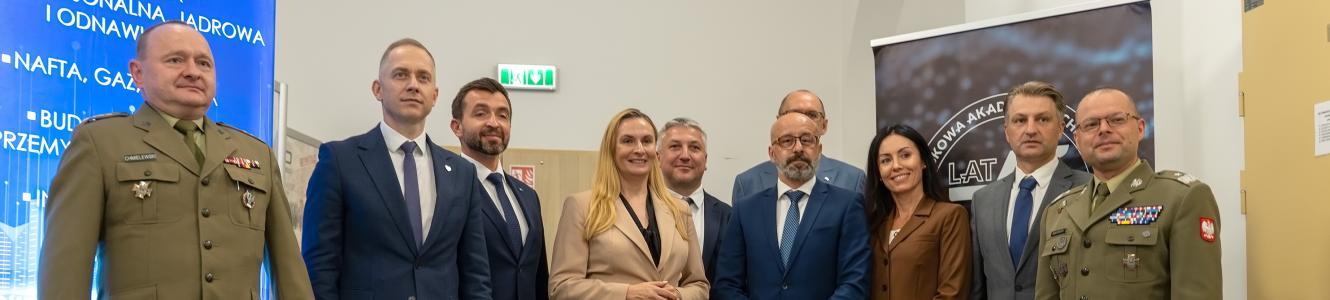
The authorities of the Military University of Technology and the Management Board of Polimex Mostostal have signed a cooperation agreement regarding the MSC 23-150 ‘CIS’ Bailey road bridge project. The project forms part of the initiatives supported by the Ministry of National Defence, aimed at developing the country’s capabilities in the area of key strategic infrastructure. The event was attended by Mr Cezary Tomczyk, Secretary of State at the Ministry of National Defence.
The MSC 23-150 ‘CIS’ bridge is an exclusively Polish design intended for both civilian and military use. It was developed by experts from the Faculty of Civil Engineering and Geodesy at the Military University of Technology (WAT) under the supervision of Col. Dr hab. Eng. Ryszard Chmielewski. The design is the result of a joint effort by the Military University of Technology and the Polimex Mostostal Group. The aim of the ongoing collaboration is to produce a prototype bridge and carry out tests which will enable the structure to be adopted and used by the Polish Armed Forces
The MSC 23-150 ‘CIS’ Bailey bridge enables river crossings for even the heaviest military and civilian vehicles. The design allows for the construction of bridges of any length, with the length of a single span of up to 60 metres. In civilian contexts, Bailey bridges are useful for the purpose of maintaining and rebuilding transport infrastructure damaged by natural disasters; they are also used to organise diversions while permanent crossings are undergoing repairs or rebuilt.
“The ‘CIS’ project demonstrates that Polimex Mostostal can draw on its more than eight decades of experience not only in carrying out the most demanding infrastructure projects, but also in co-developing innovative technologies and their implementation.” Together with the Military University of Technology, we have refined the design solutions, and today we are entering the next, extremely important stage: preparing the bridge for use in practice. We see real business potential in this project, as well as an opportunity to further develop our competences in the field of security and defence infrastructure. We want to be a partner combining engineering expertise, manufacturing capabilities and practical experience with the ability to effectively implement advanced technological solutions in practice.” – said Piotr Andrusiewicz, President of the Management Board of Polimex Mostostal.
“For 75 years, the Military University of Technology has been developing technologies implemented and incorporated into the equipment of our Armed Forces and the Polish economy. The MSC 23-150 ‘CIS’ bridge is yet another project in which, as part of ongoing scientific research carried out in collaboration with an industrial partner, a specific solution is being developed for future military and civilian use. This bridge is fully adapted to the needs of our army. It enables even the heaviest equipment in the arsenal of the Polish Armed Forces to be transported safely. Its implementation will provide new capabilities for the armed forces and the civil defence system. Thanks to this technology, it will be possible to construct a road crossing should permanent bridges be damaged or destroyed – as was the case during the floods.
The solution developed by WAT and Polimex Mostostal also allows for two-way traffic of logistics convoys and meets the requirements for motorway traffic. Furthermore, it is a Polish solution, a result of Polish engineering and produced by a Polish manufacturer, and it is not affected by disruptions to supply chains.” - emphasised Brigadier General Prof. Dr hab. Eng. Przemysław Wachulak, Rector and Commander of the Military University of Technology.
The implementation of the project has an economic aspect to it. It will enable Polimex Mostostal to expand its operations into new market segments.
“From a financial perspective, the project entering the implementation phase is a significant milestone. The design, developed in collaboration with the Military University of Technology, can be used in practical application, thereby enabling its market potential to be realised. For the Group, this offers an opportunity to make effective use of its current expertise and resources while developing a new area of business. In the long term, projects with such potential can support the diversification of revenue streams, improve the competitiveness of and build the long-term value for the Polimex Mostostal Group.” - said Marzena Hebda-Sztandkie, Deputy President of the Management Board of Polimex Mostostal S.A.
“The licence agreement confirms the vital role played by the Military University of Technology in the modernisation of the Polish Armed Forces, where state-of-the-art technologies for national security and defence and dual-use technologies are developed.” This is yet another success in the commercialisation of the intellectual property generated at the University." - concluded Dr hab. Eng. Adam Bartnicki, Director of the Technology Transfer Centre at the Military University of Technology.
The agreement was signed on 3 September 2026 at the Military Centre for Civic Education in Warsaw. The event was attended by Cezary Tomczyk, Secretary of State at the Ministry of National Defence, representatives of the Military University of Technology and of the Polimex Mostostal Group.
The initiators of the project are: Col. Dr hab. Eng. Ryszard Chmielewski, Dr Eng. Mieczysław Piechota, Dr Eng. Andrzej Wolniewicz, captain, MSc (Eng.) Alicja Ostrowska and Erik Mikulski, captain, MSc (Eng.). This innovation was developed at the Faculty of Civil Engineering and Geodesy at the Military University of Technology. The design of the Bailey bridge is based on patented technologies.
A video showing a visualisation of the bridge is available HERE